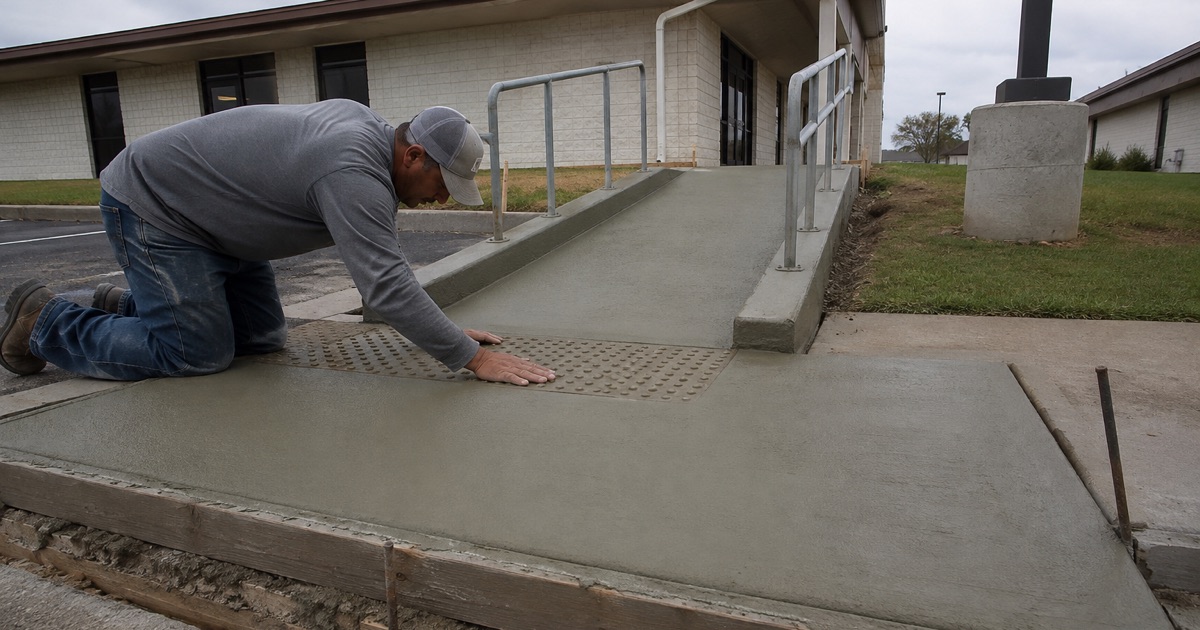
What a Concrete Job Here Actually Involves
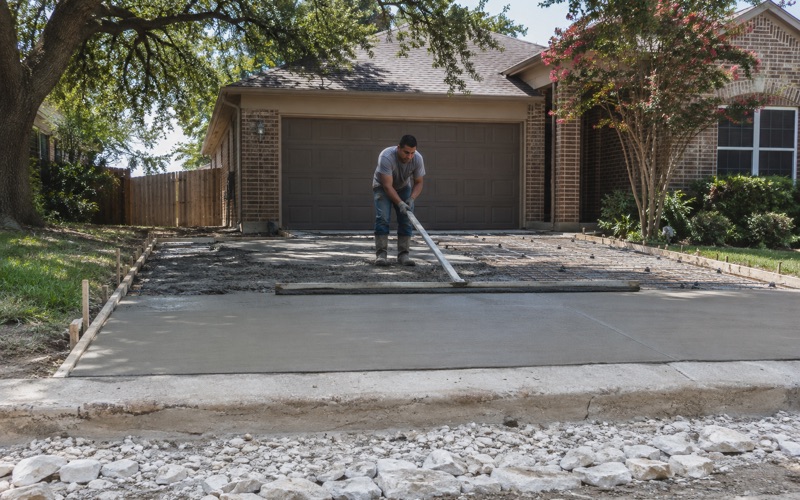
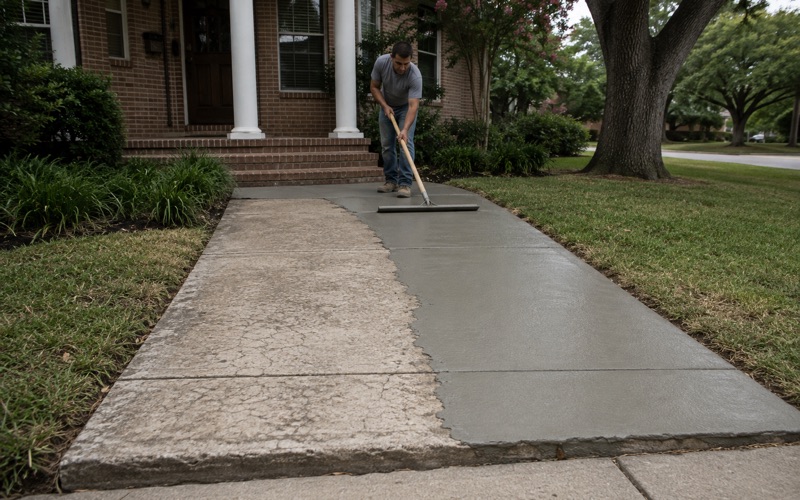
A concrete job runs from a look at the ground through excavation, subgrade, base, reinforcing, forms, the pour, finishing, joint cutting and curing before anyone drives on it. We put that sequence in writing at bid time with dates attached, because the day you get your driveway back usually matters more than the price per square foot.
Six Counties, a Dozen Rule Sets for Concrete Work
Our service area crosses Hays, Caldwell, Comal, Guadalupe, Travis and Bastrop counties, and the flatwork rules are not harmonized across them. We keep the current amendments per jurisdiction rather than working from one regional habit, which is why the same patio detail can be correct in one city and rejected six miles away.
Expansive Clay and a Plasticity Index of Forty Four
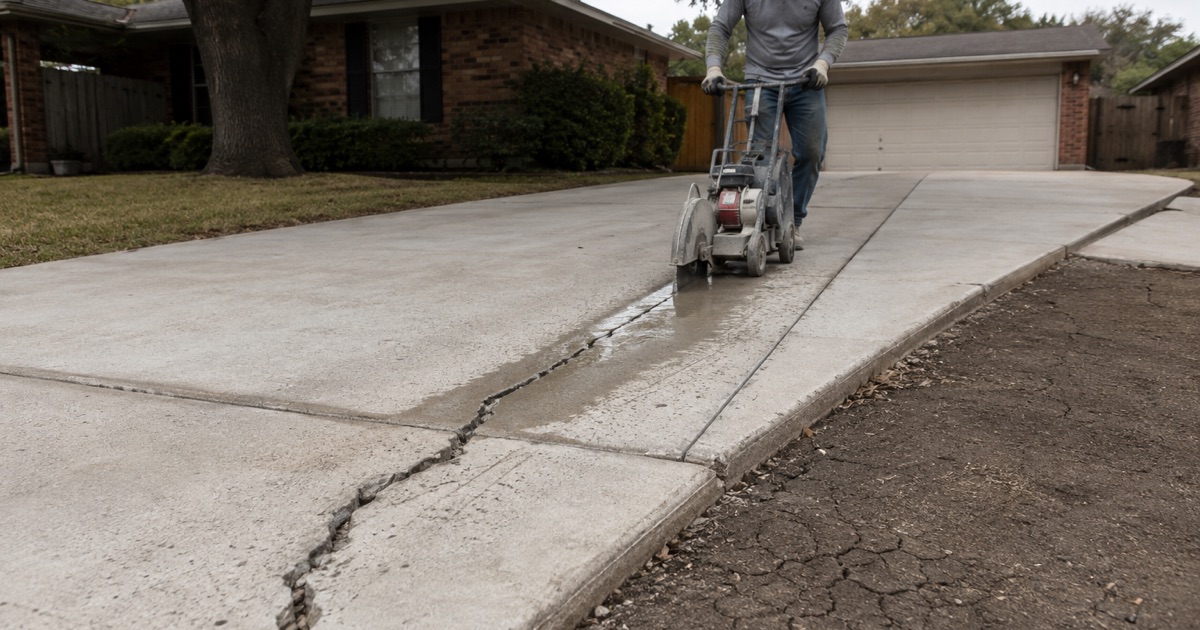
Houston Black clay on 1 to 3 percent slopes covers 13.97 percent of San Marcos, and its dominant component carries a representative plasticity index of 44, a liquid limit of 70 and linear extensibility of 12.0 percent through the upper 60 inches. Ground that moves that much gets thickness, steel and joint spacing chosen for it rather than a default detail.
Claypan Ground Under a Sandy Surface
Some lots read as benign at the surface and are not. A sandy or loamy top horizon over a high plasticity subsoil is a claypan, and the movement lives in the layer you cannot see from the driveway. We test below the surface horizon, because the wrong read here produces a slab that cracks in its second summer.
Shallow Rock, Refusal Depth and Rippable Ground
Refusal is where the excavator stops, and depth and hardness both matter. Weakly coherent paralithic bedrock can be ripped with ordinary equipment; indurated lithic bedrock at 30 centimeters, as under Comfort soils, generally cannot. We price rock as rock and name which kind we expect, so a hammer day is a line you approved rather than a change order at lunchtime.
Concrete Driveways and the Public Right of Way
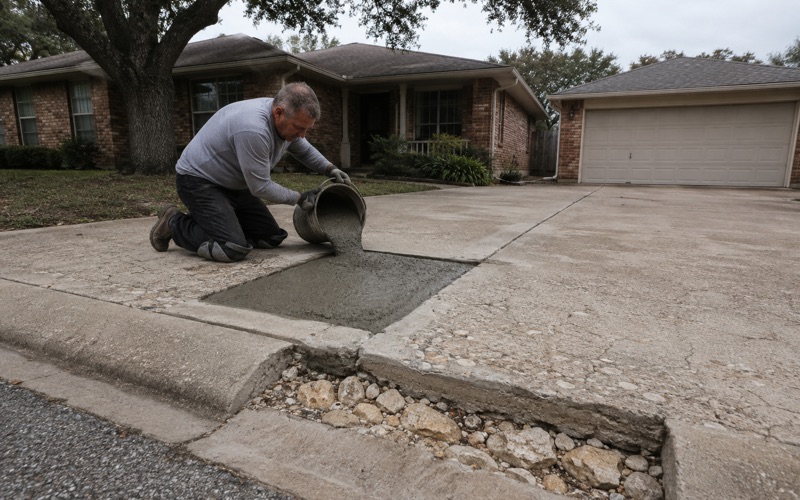
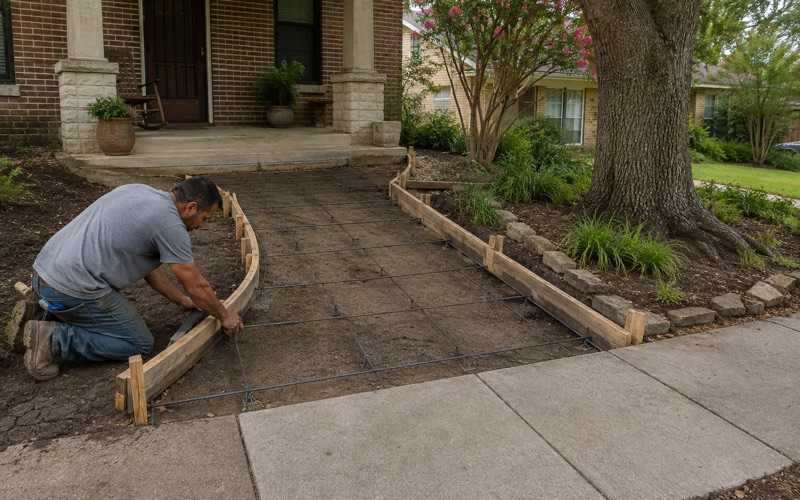
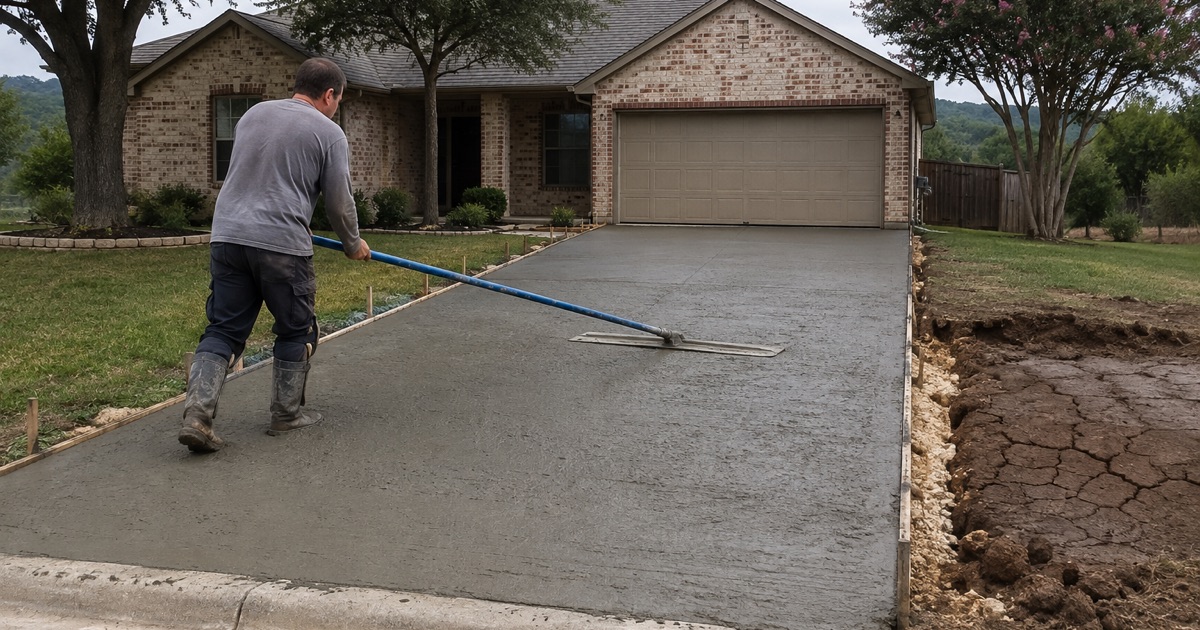
A driveway becomes public work the moment it crosses into the right of way, and the approach is reviewed against city geometry rather than your preference. San Marcos Code Table I in Sec. 74.193 sets single-family two-way approaches at 10 to 20 feet wide with a 5.0-foot radius. We build the approach to the table and the private drive to your use.
Concrete Slabs and Pads for Shops, RVs and Equipment
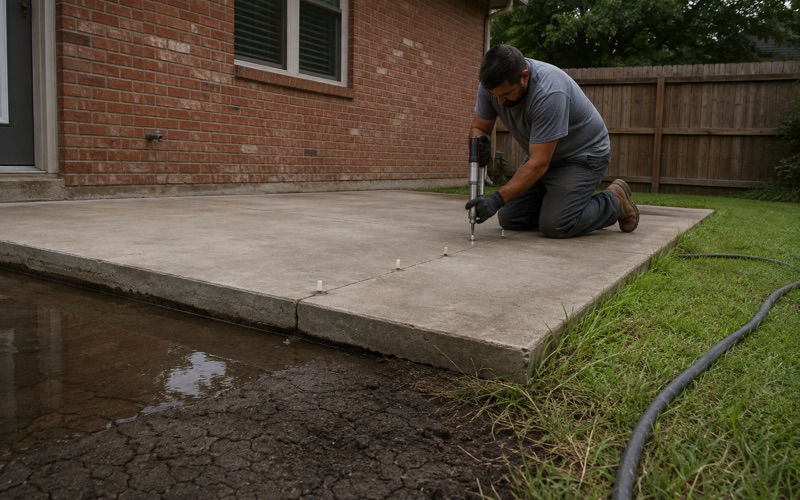
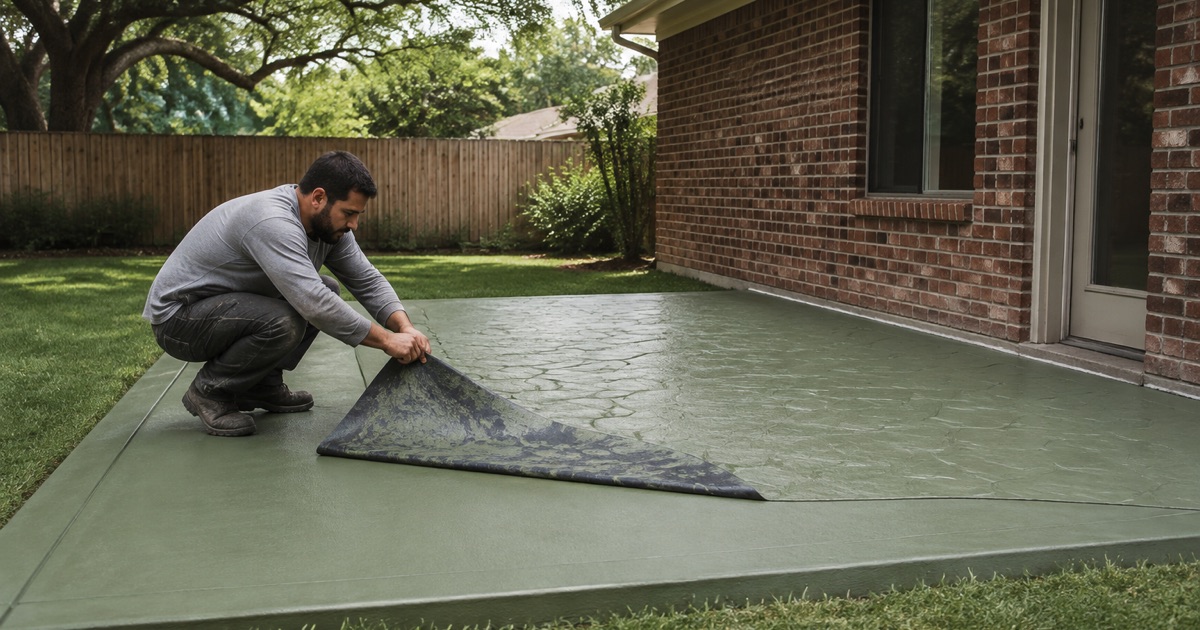
Shop floors, shed pads, RV parking, generator pads and equipment bases each carry a different load and a different tolerance for movement. A generator wants a level, isolated pad; RV parking wants thickness and edge support where the wheels sit. We size thickness, reinforcing and turndown edges to the actual load rather than pouring one four inch slab for everything.
What Goes Under a Slab Before the Concrete Does
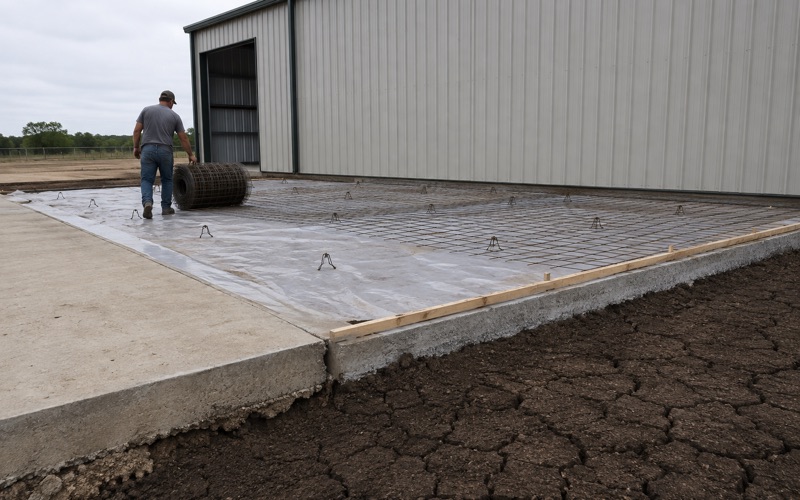
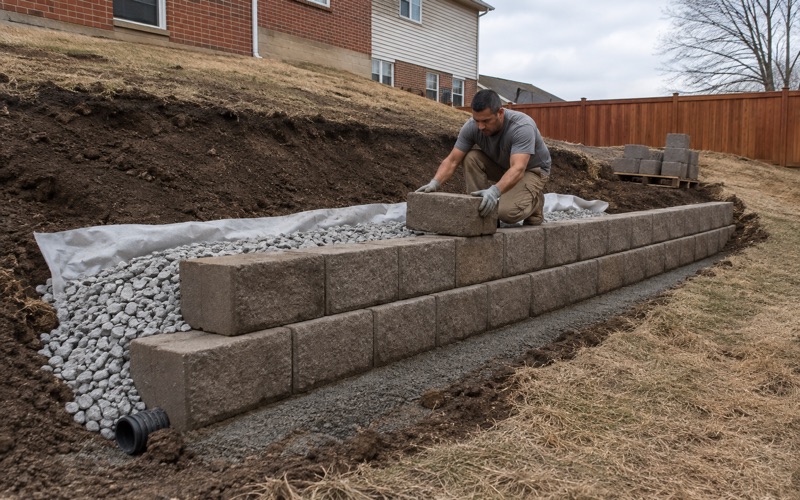
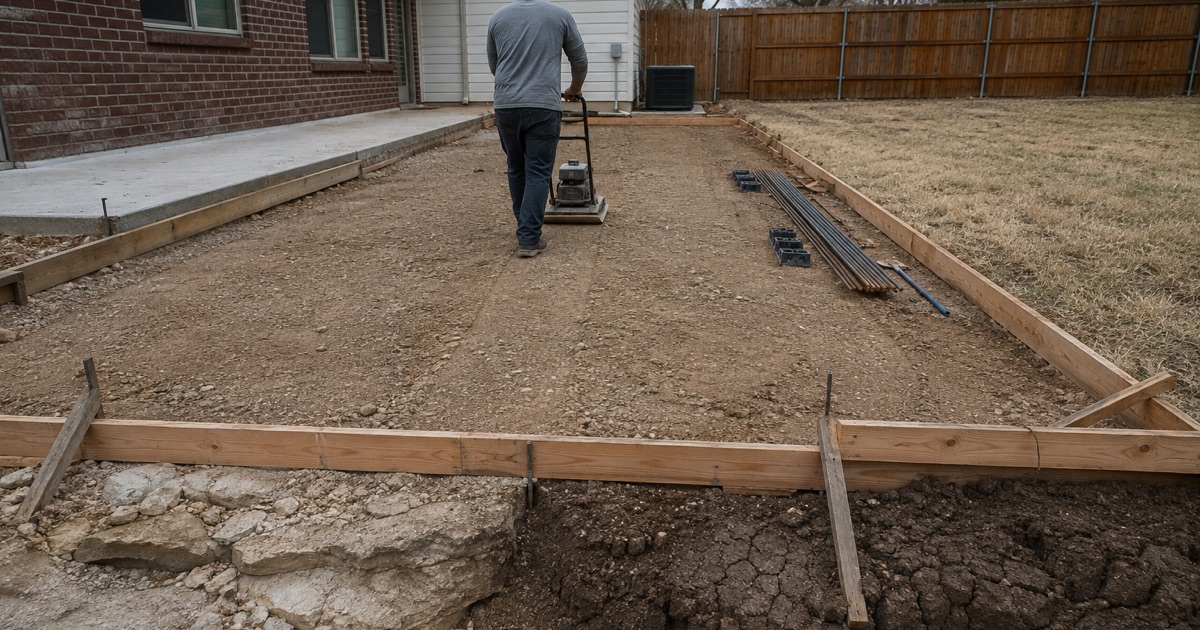
Under the slab sits compacted subgrade, then flexible base course or sand bedding, then a vapor retarder where the space will be conditioned. Compaction is measured against proctor density rather than assessed by boot, and an ASTM E1745 ten mil vapor barrier is lapped and sealed. We photograph each layer before the pour.
Rebar, Fiber Mesh and Welded Wire Reinforcement
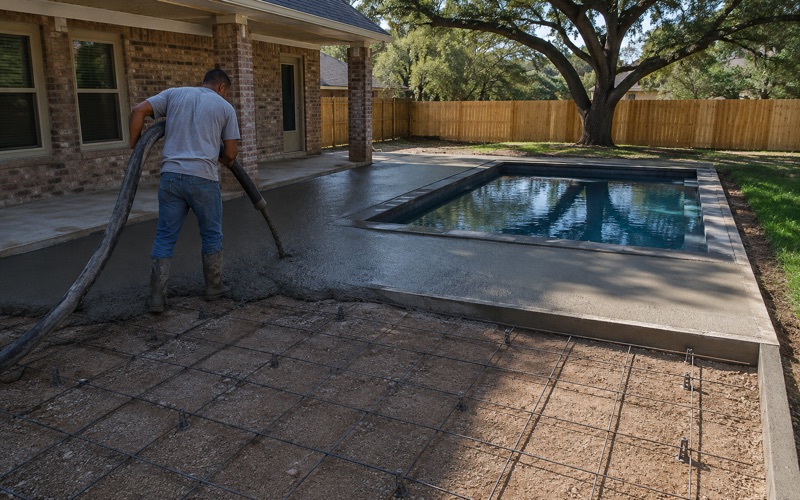
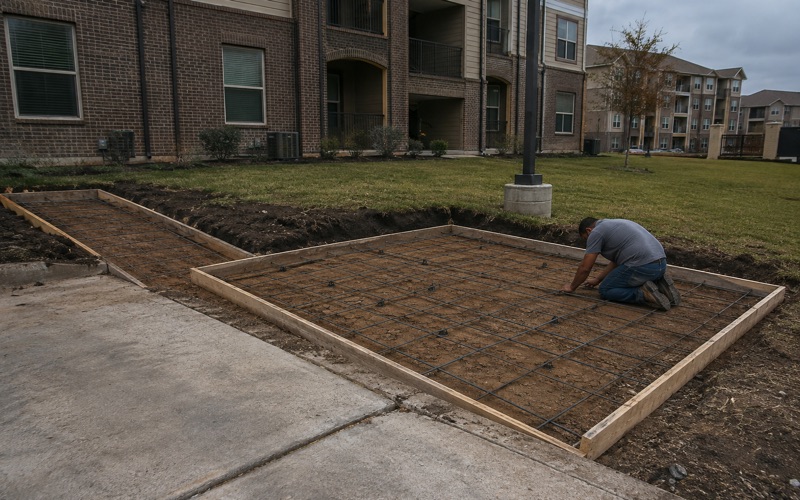
Reinforcement does not stop concrete cracking; it holds the crack tight once it happens. Number four and number three rebar on chairs at mid-depth does that well, macro synthetic fiber controls plastic shrinkage cracking without being a structural substitute, and welded wire fabric works only if it stays chaired off the base. We name which your jurisdiction requires and which your slab needs.
Pouring Through a Central Texas Summer
San Marcos averages 104.6 days a year above 90 degrees against 18.5 below freezing, on the NOAA 1991-2020 normals at station USC00417983. Hot weather placement is planned around the temperature of the concrete rather than the calendar, because the discharge limit is keyed to the concrete itself: earlier starts, chilled water or retarder where warranted, and curing that begins immediately.